Back when I was a chemical engineering undergrad at Berkeley, I became fascinated with experiments in supersaturation. For the uninitiated, it turns out that under the right circumstances, you can dissolve more and more solute into a solution to create something that shouldn't exist—a supersaturated liquid. The textbooks say you've dissolved too much, yet somehow the solution remains impossibly liquid, trembling with potential, one tap away from transformation.
Then comes the nucleation moment. A single seed crystal dropped into the supersaturated solution catalyzes an epic state transition. Liquid becomes solid, chaos becomes structure, potential becomes form.
Over the two years before last November, the AI industry had reached a similar state of supersaturation, with every company cramming in more custom integrations and bespoke protocols. Everyone has been rebuilding the same bridges and maintaining the same adapters.
Then Anthropic dropped MCP and we witnessed our nucleation moment.
The crystallization was rapid. OpenAI (notably Anthropic’s main competitor) adopted MCP, and Google shortly followed. In under a year, MCP's momentum has surpassed all expectations. The Python SDK alone shows nearly 19,000 GitHub stars and MCP servers are already running in production, even at companies operating in regulated industries!
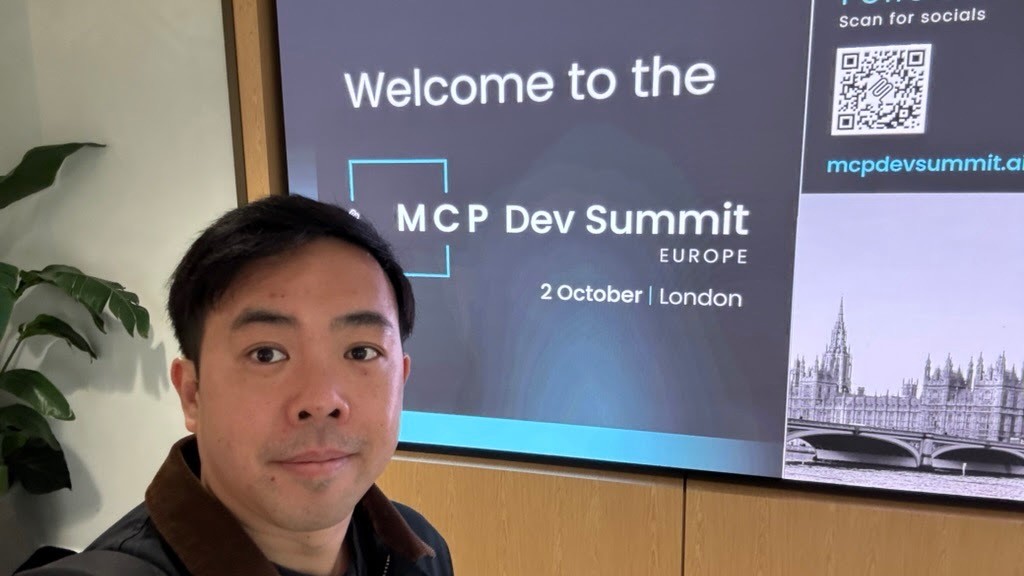
Last week, I attended the MCP Developer Summit in London. It's common, especially among technical circles, to say that the protocol’s popularity outstrips real adoption. While that might be true, the presenters at the summit stage sang a different tune. Bloomberg spoke about their strategic deployment of MCP servers internally. Turkish Airlines demonstrated their client-facing production implementation. Shopify described rich commerce interfaces that went far beyond plain text chat. These weren't just toy demos either, they were production systems carrying real workloads in regulated, high-stakes environments.
Of course, it's still early days. MCP isn't even a year old. I noted three major themes at the conference as active, ongoing challenges to MCP adoption:
Taming tool sprawl — Agents behave worse and cost more when you hand them the kitchen sink. Give an agent fifty tools and watch it stumble. Successful teams are finding ways to curate focused tool sets per task and implement smart routing through gateways to enable better governance, rate limits, and observability.
Enabling security through identity and policy — MCP security isn't just a transport choice, it's authentication and authorization that enterprises can reason about. The current spec leans heavily on OAuth standards for discovery and dynamic client registration, addressing fundamental challenges familiar to distributed systems. The practical takeaway for builders is simple: make identity first-class, use proven security architectures (ephemeral tokens, least privilege), and bake consent and audit trails into your product from day one.
Richer interfaces — Chat isn't always the best interface for humans or agents. The most compelling demos in London showed implementations where servers return interactive components that render natively in the client. In commerce, this means product galleries and checkout flows living inside the chat experience. In analytics, it means real-time charts and visualizations (finally!). The potential for rich UIs points to a potential future that looks profoundly unfamiliar, a world where our primary access to information isn't through a web browser, but through our agents.
I left London with a feeling I'd almost forgotten: the thrill of being early to something inevitable. Not early to a trend or framework, but early to a fundamental restructuring of how AI systems connect to our world. MCP, flaws and all, has the potential to unlock all the potential energy trapped in our AI models. When every AI agent can instantly access any tool or data source through a common protocol, the combinatorial explosion of possibilities will crystallize into a new age.
Originally published on LinkedIn.