Taking prompt optimization from an art into a science: An interview with MIPRO’s Krista Opsahl-Ong
My Vertex Ventures US colleague Sandeep Bhadra and I are thrilled to share our conversation with Krista Opsahl-Ong, a rising star in AI development and PhD candidate at Stanford’s Artificial Intelligence Lab (SAIL). Under the guidance of Chris Potts and with NSF support, Krista has brought both academic rigor and practical industry experience from Microsoft and Google to one of AI’s most pressing challenges: prompt optimization.
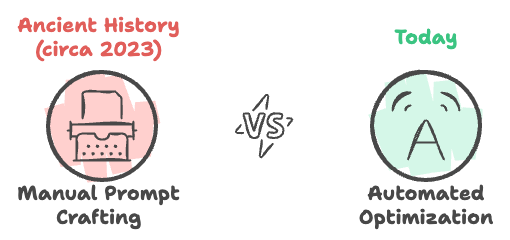
As someone who spent years building in the prior wave of ML, most things feel very familiar in this new wave of Gen AI. Prompt engineering is not one of those things. Just eighteen months ago, developing in AI felt both like living in the future and a step back into the past — manually tweaking prompts and hoping for better outputs. Surely our developer community could come up with something more, well, programmatic?
Enter MIPRO, one of the most promising developments in prompt optimization for multi-layer LLM systems. At its core, MIPRO treats prompt engineering as a proper optimization problem. With some clever structure, developers can use MIPRO to discover and refine prompts that maximize performance across diverse inputs, while maintaining consistency across multiple LLM calls. I think of it as an automated prompt engineer that can simultaneously tune all the prompts in your multi-stage LLM programs.
MIPRO is integrated with DSPy, a programming framework that helps developers compose LLM-powered applications. Together, they’re transforming how we build and optimize AI systems and FINALLY moving us away from manual prompt crafting toward the more sane, familiar world of automated, systematic optimization.
I think you’ll enjoy Krista’s clear explanation of MIPRO and how it can transform prompt optimization from an art into a science. Click here or watch below to watch our interview with Krista as we dive into what MIPRO means for the future of AI development:
Originally published on Medium.